


The Taj Mahal indeed gets all the attention from those who visit Agra. However, the second most commonly visited monument is Agra Fort. This is one of the most elegant pieces of architecture, which has stood through four generations of the Mughal Era. This is one of the first monuments to be declared as heritage sites in India. Mughals recognized the Agra Fort as their symbol of strength and prosperity. If you are visiting Agra, you ought to visit Agra Fort. Explore the Complete Travel Guide to Agra Fort.

Read more - How to Reach Agra from Delhi?
Agra Fort Attraction
Agra Fort can be reached from any part of the city. You can find buses, cabs, rickshaws, and other road transport to reach Agra Fort from any part of the city. Tourists usually visit Agra Fort along with the Taj Mahal, as it is just 2.5 km away from the Taj Mahal.
Suggested tour package: Same Day Taj Mahal Tour By Car From Delhi
History behind Agra Fort
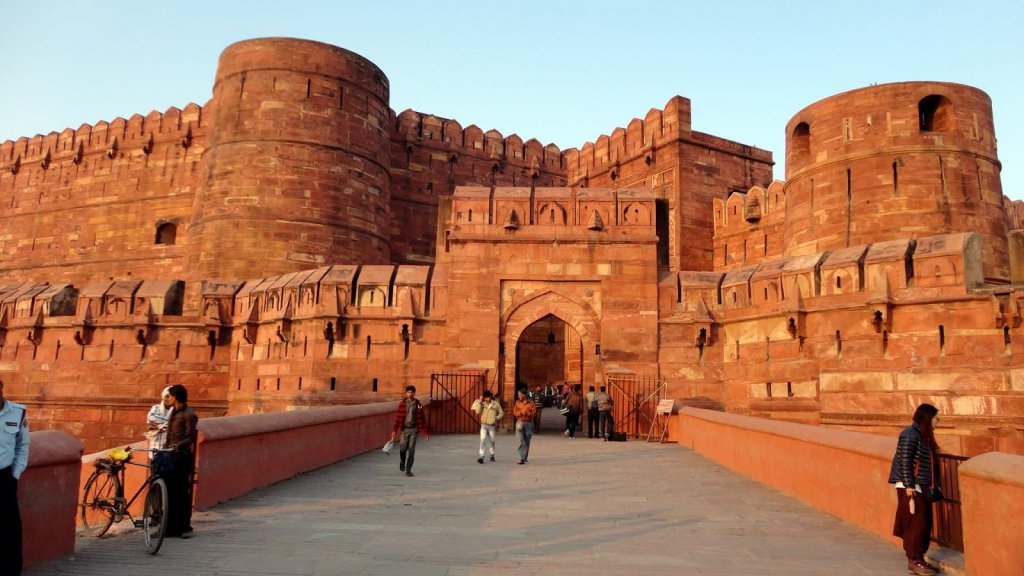
The existence of the fort is mentioned in many literary works and inscriptions dating to the 11th century. Thus, the fort is assumed to have existed before the 11th century. In the 16th century, Emperor Akbar renovated this fort from a brick fortress to a sandstone beauty monument. When it was a brick structure under the control of Rajputs, it was called Badalgarh. During the Mughal Era, it got the name of Agra Fort.
The fort was in ruins when Akbar took over it, and he built the fort entirely with red sandstone. It took eight years to complete this massive fort. However, his grandson, Shah Jahan, deliberately brought down many structures to dust to make room for marble structures. This was considered to be a massive revenue waste during his reign. Later, his son took over the fort and imprisoned him in the very same fort. It is said that Shah Jahan requested to be imprisoned inside the fort, in a tower, from where he could spend the rest of his life watching the Taj Mahal from the tower.
When the fort was in Aurangazeb’s control (son of Shah Jahan), there weren’t many changes to the structure. A moat was added to the walls to increase the defense. After Aurangazeb’s death, there were no strong rulers to take Mughal rule under control. Smaller kingdoms fought during the reign, and it wasn’t too long before Agra came under the control of the Marathas. Over the next century, the fort went to many dynasties, which made little to no changes to the structure of the fort.
Later, the British took over the fort and used it for military purposes until independence. They set up barracks inside the fort and destroyed many monuments to make room for the army. After independence, the fort came under the control of the Government of India.
Suggested tour package: 7 days – Private Delhi Agra Jaipur tour
Explore Shopping in Agra
Architectural Beauty of the Agra Fort
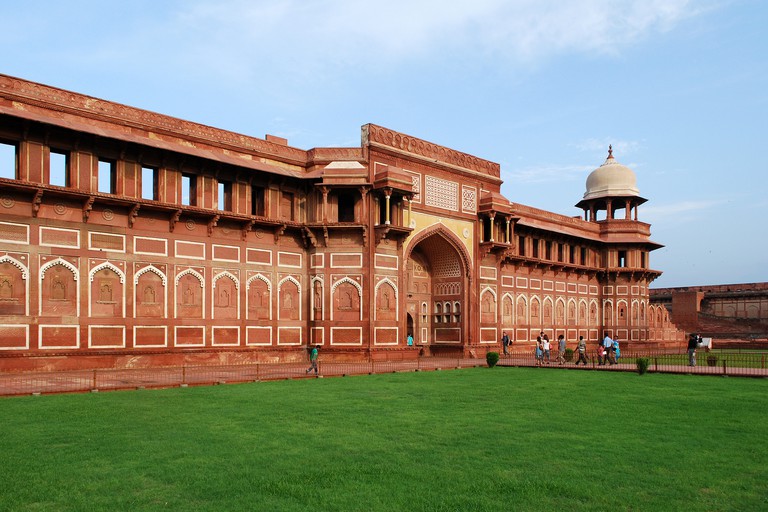
This was one of the early Mughal forts, and it was mainly built for military purposes. This colossal fort had 70-foot-tall walls, which still stand. These walls were designed for defense purposes. The walkways and entrances are specifically made narrower to make it hard for enemies to plunder into the fort at once.
The fort also has many tunnels through which royal families can escape to the shore of the River Yamuna in case of unfortunate events. The entrance and the routes of the tunnels were passed on only to the royal heirs, and it is assumed that numerous other secret passages in the fort are yet to be discovered.
In terms of architecture, it is a fusion of Hindu and Islamic-style architecture. There are also theories about Agra Fort being inspired by the grand Gwalior Fort. Each structure inside the fort has a unique style. You can find Gujarati structures, Bengali-style monuments, and so on.
Suggested tour package: 8 days – Golden Triangle tour
Read more: When Is The Best Time To Visit Golden Triangle India (Delhi Agra Jaipur)?
What to see inside the Agra Fort
1. Jahangir's Palace
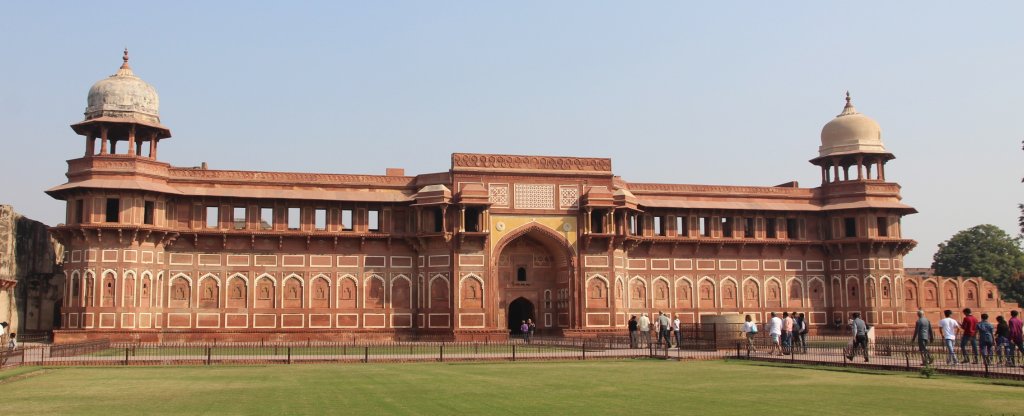
This is one of the most notable structures and the oldest palace in the fort. This fort was used by the royal females and has many delicate carvings and architectural elements.
2. Khas Mahal
This is the palace of Mumtaz Mahal, wife of Shah Jahan. This structure is built in a fusion of Persian and Islamic architecture. The interior walls are decorated with gold, gems, and precious stones. The palace is made with marble, and etchings are made to create floral designs. Other notable architectural elements are lattice work, fountains, ceiling art, and others.
3. Musamman Burj
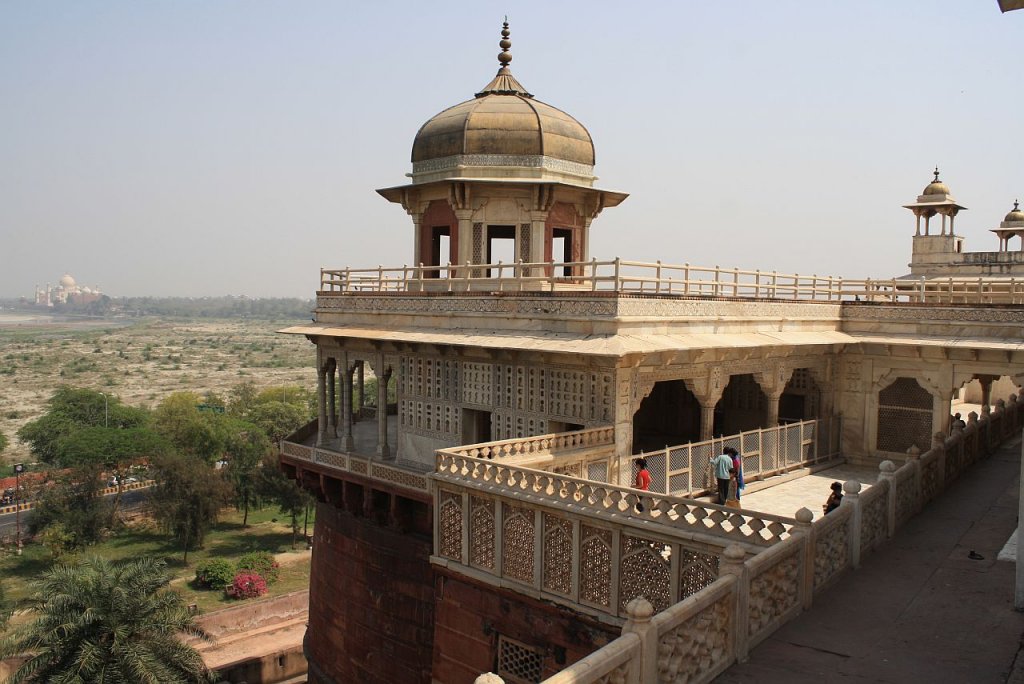
This is also called the octagonal tower. This is the place where Shah Jahan was imprisoned by his son. As mentioned before, from this tower, you could get a flawless view of Taj Mahal, if you are visiting on a clear day. The tower is decorated with simple but elegant inlay work.
4. Diwan-i-Khas
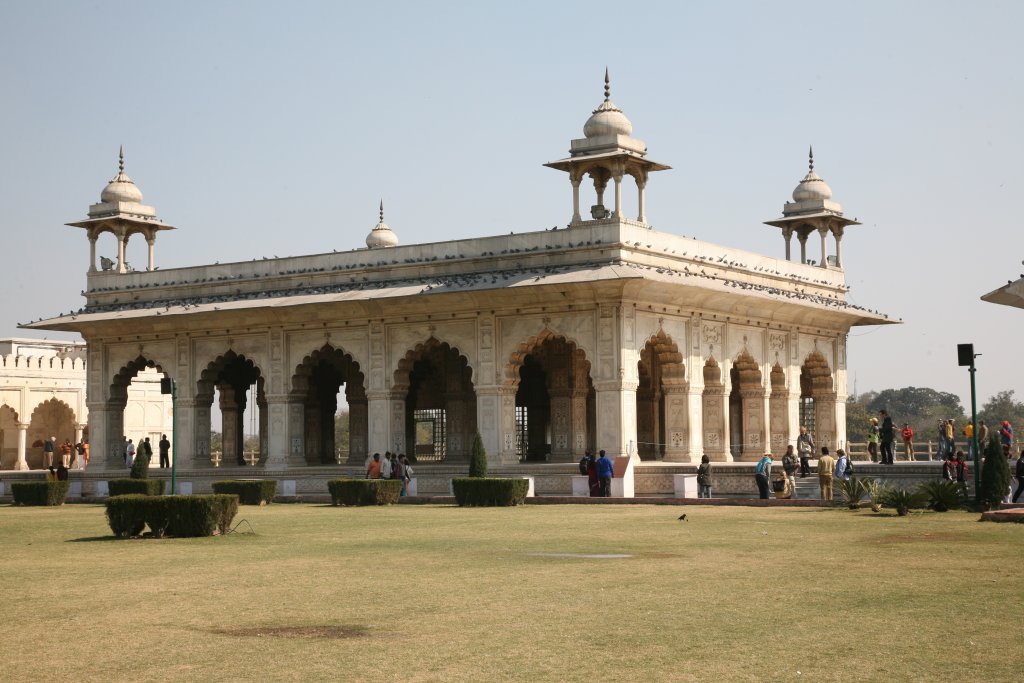
This is the place where the rulers met with private audiences. This hall was built by Akbar and was remodeled by Shah Jahan. Thus, you can find many marble carvings, floral motifs, and decorative works of Persian style. This hall used to hold the famous Peacock Throne, which was later looted away from India in the 18th century.
5. Sheesh Mahal
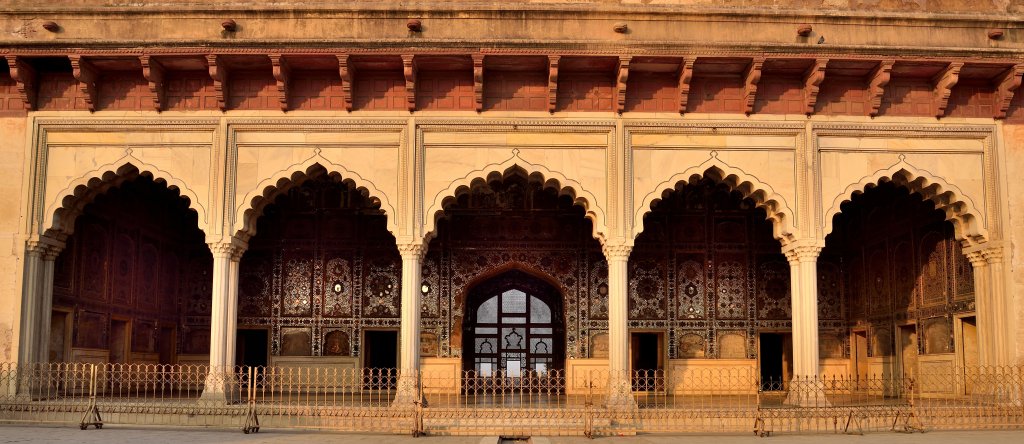
This mirror palace is made entirely with reflective surfaces. This palace has intricate mirror work, attractive carvings, and a serene beauty.
6. Shahjahani Mahal
This is a fusion of marble and sandstone. This is the earliest monument made with sandstone that Shah Jahan tried to remodel with marble.
7. Jahangir’s Chain of Justice
This is a large chain made with gold. Any citizen who believed that there is injustice in the reign would shake the chain and create a colossal sound with the 60 bells attached to it. This is the grievance redressal method during the Jehangir reign.
Other important structures to see here are
- Moti Masjid
- Mina Masjid
- Golden Pavilions
Suggested tour package: 9 days – Delhi Agra Jaipur with Goa tour
Read more: 20 Best Places to Visit in India with Kids
Visiting time
The fort is open from sunrise to sunset. The best time to visit the fort is during early morning or sunset to watch the effect of sunrays on the fort. The best season for visiting the fort is winter or early summer.
It is best to visit between October and April. The climate will be pleasing, and the sky will be clear for convenient sightseeing. Most people choose to visit Agra Fort in the evening and stay back for the sound and light show. Also read a few more pieces of information about the best time to visit Agra.
Read more: Top Things to do in Agra
Suggested tour – 4 Days – Delhi Agra Private Tour
Entry to the Agra Fort
There are four entrances to the four and out of these, two are walled shut. Among the rest, only the southern gate is open for tourists. The North Gate is under the control of the Indian Army and is not open to the public. The southern gate is called Amar Singh Gate. During the Akbar reign, this fort gate was called Akbar Darwaza, as it was used by Akbar for all his entourages.
Suggested tour package: 9 days – Delhi Agra Jaipur + Varanasi (Ganges tour)
Once you enter the fort via the southern gate, you will find the ticket counter.
Ticket cost for Indians:
- Cash tickets – INR 50 per head
- Cashless tickets – INR 35 per head
- Sound and light show – INR 70 per head
- Children below 15 years – free
Ticket cost for foreigners
- Cash tickets – INR 650 per head
- Cashless tickets – INR 550 per head
- Sound and light show –INR 200 per head
- Children below 15 years – free
Suggested tour package: 10 days – Delhi, Agra, Jaipur with North India temples
Things that are not allowed inside the fort
- Cell phone charger
- Headphones
- Dangerous items like explosives
- Knives or sharp items
- Alcohol
- Tobacco items
- Merchandisable items
Read more: Top 20 Tourist Places to visit in Agra


